
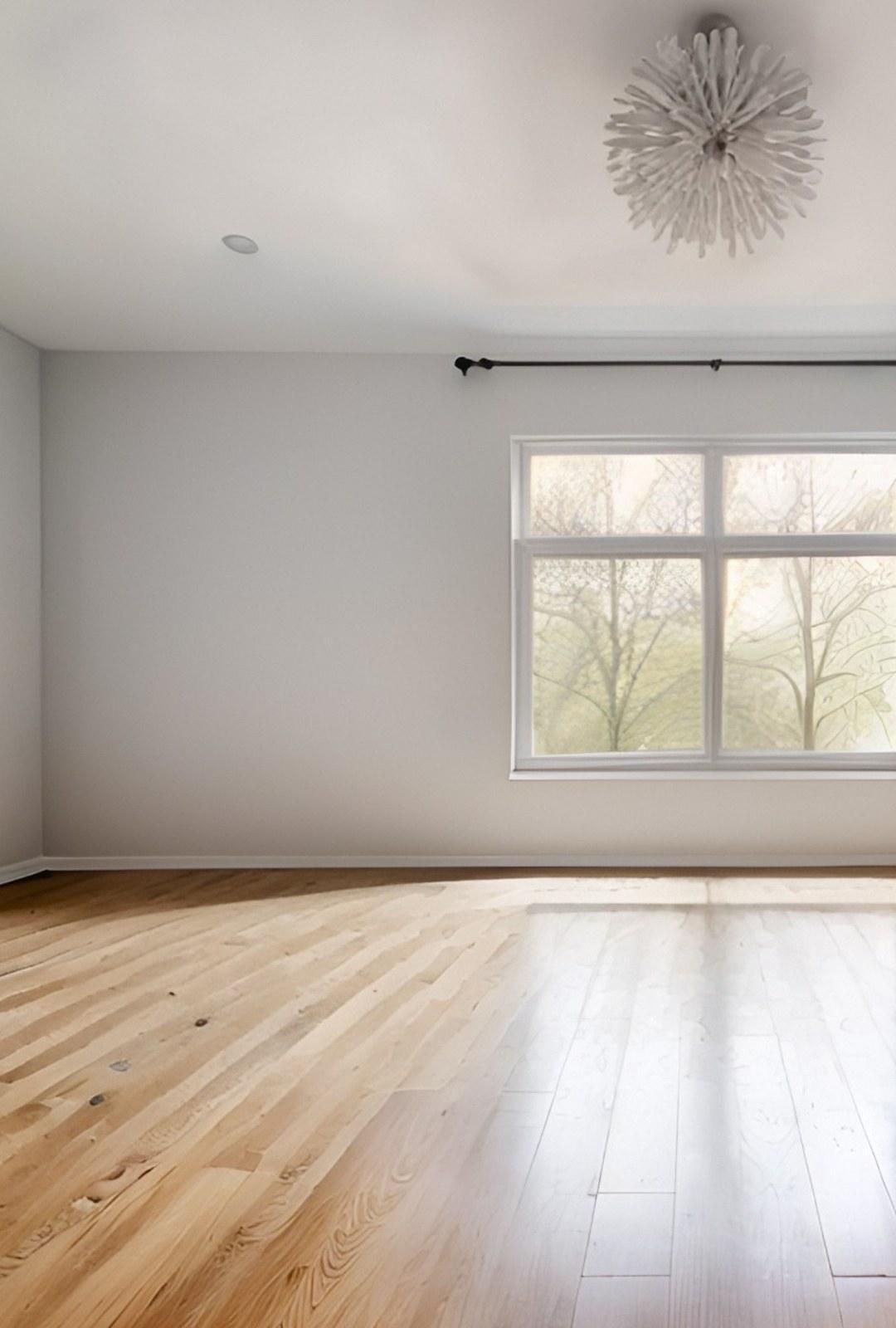
Spray finishing
Spray painting interior walls, ceilings and joinery
Professional spray finishing for homes, new builds and commercial spaces across London: a flawless, even finish, applied faster and with every surface protected.
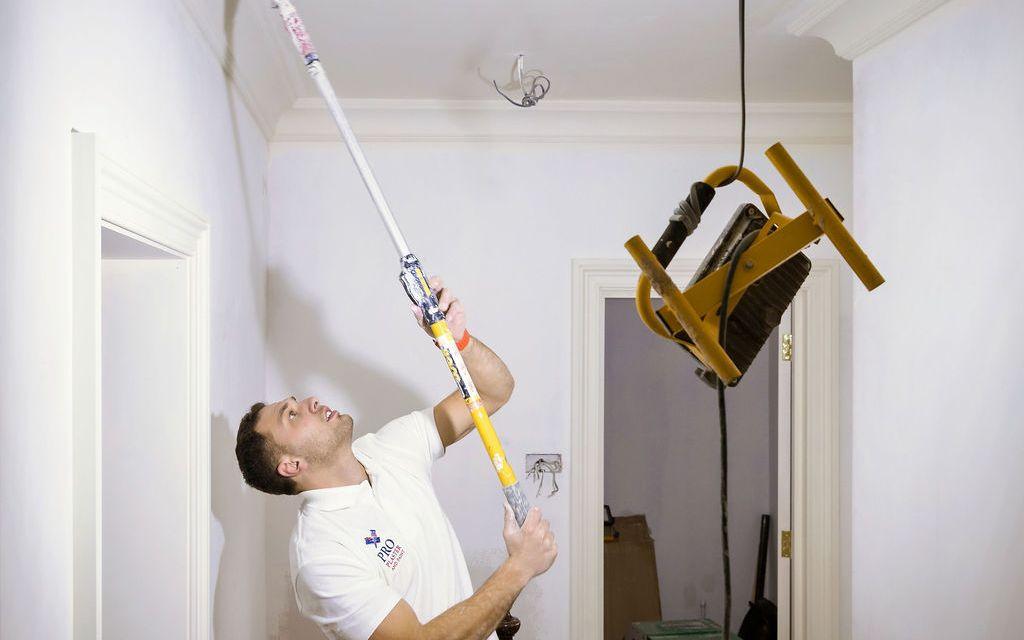
Airless spraying
A flawless, fast finish on walls, ceilings and joinery
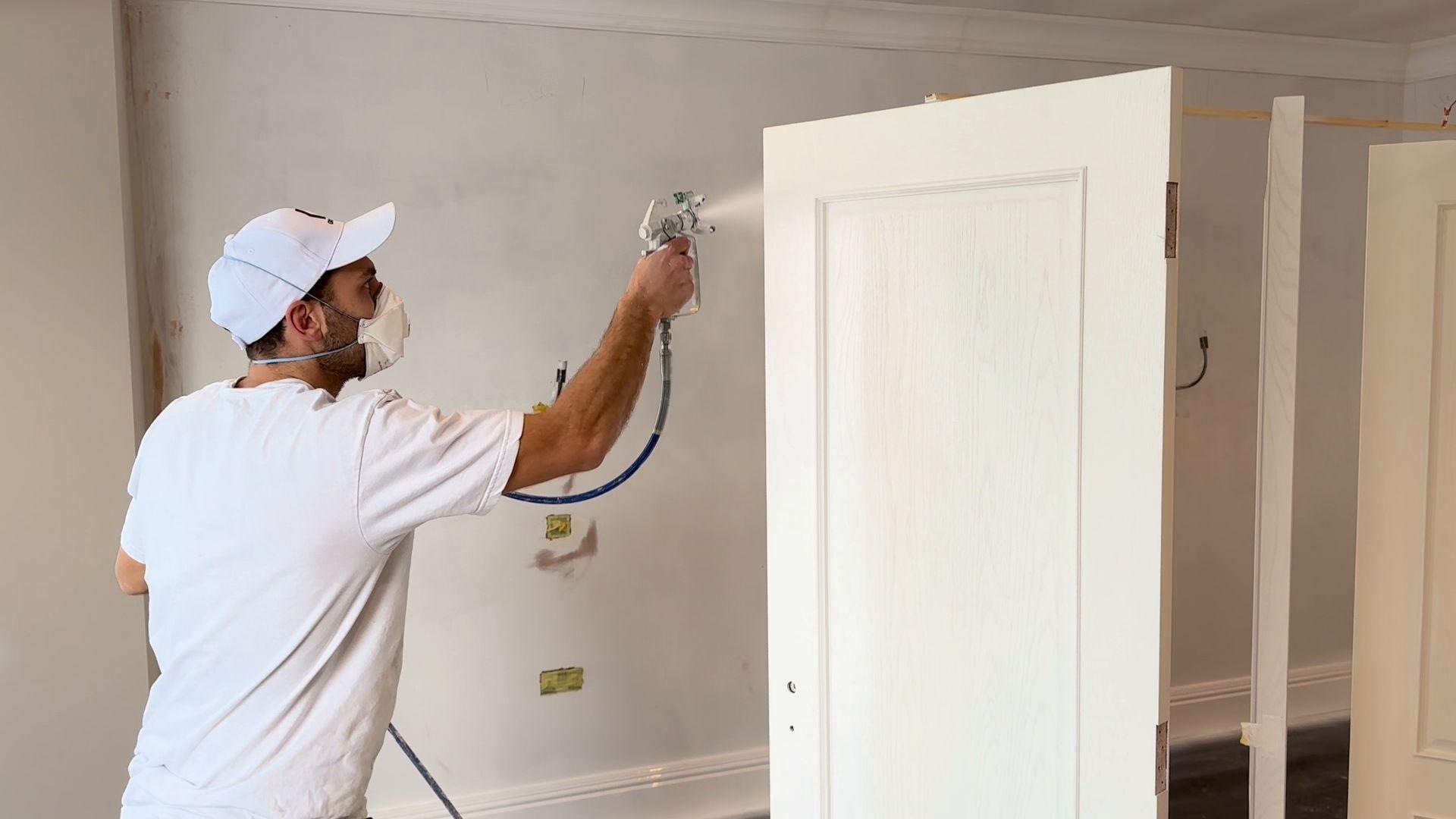
Spray painting walls gives a finish that a roller cannot: no lap marks, no stipple and no brush strokes, just an even film of paint from corner to corner. Our airless spraying equipment atomises the paint into a fine mist, so it flows into cornices, mouldings and panel edges and dries perfectly smooth.
It is also fast. On empty rooms, open-plan spaces and high ceilings, spraying covers in hours what would take days by hand, which is why developers and facilities managers use it to keep projects on programme. For finer work such as doors, furniture and kitchen cabinets, we switch to low-pressure HVLP equipment.
- Flawless
An even, factory-smooth film with no brush or roller texture.
- Fast
Several times quicker than rolling on large, empty areas.
- Versatile
Walls, ceilings, doors, staircases, radiators and metalwork.
Where spraying works best
The surfaces and spaces we spray
Spraying pays off where there is a lot of surface, a lot of detail, or both.
New builds
Mist coats and finish coats on fresh plaster, plot by plot.
Large open areas
Open-plan floors, halls, warehouses and stairwells covered quickly and evenly.
Ceiling spraying
High and ornate ceilings sprayed without roller marks or flashing.
Doors and joinery
Panelled doors, skirting, shutters, staircases and spindles.
Radiators and metalwork
Radiators, pipes and railings in heat-resistant and metal paints.
Commercial spaces
Offices, shops and hotels sprayed out of hours, and cladding spraying outside.
Spray versus brush
When we spray, when we brush, and why we combine them
Spraying is not always the best choice. Switch between the options to see how we decide for each surface.
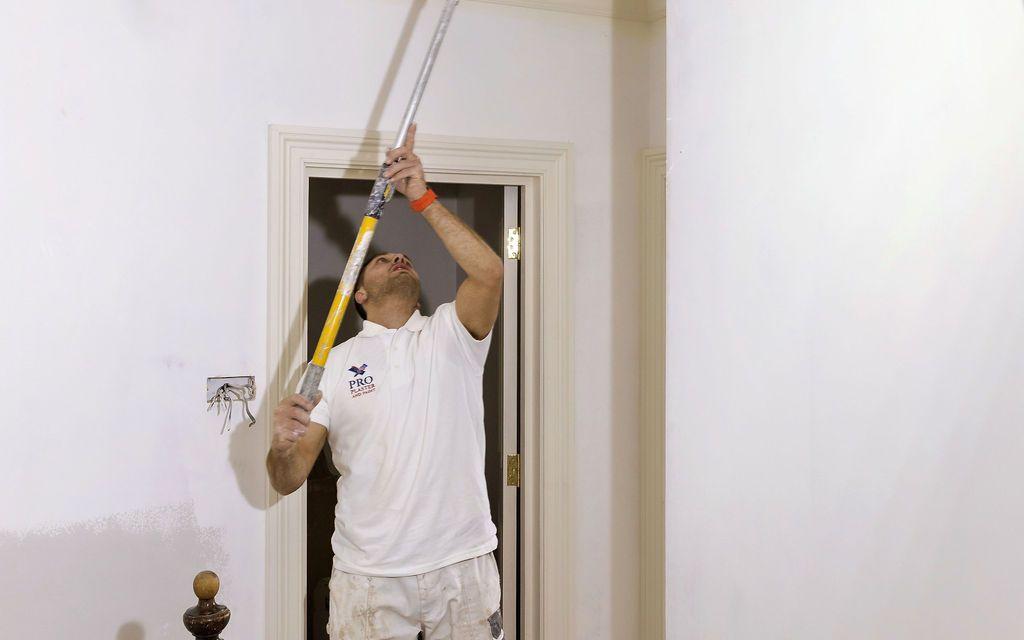
When we spray
Spraying wins wherever there is a lot of surface or a lot of detail, and the room can be emptied and masked.
Best for
- Walls and ceilings in empty properties
- Mist coats on new plaster
- Panelled doors and spindles
- Radiators and metalwork
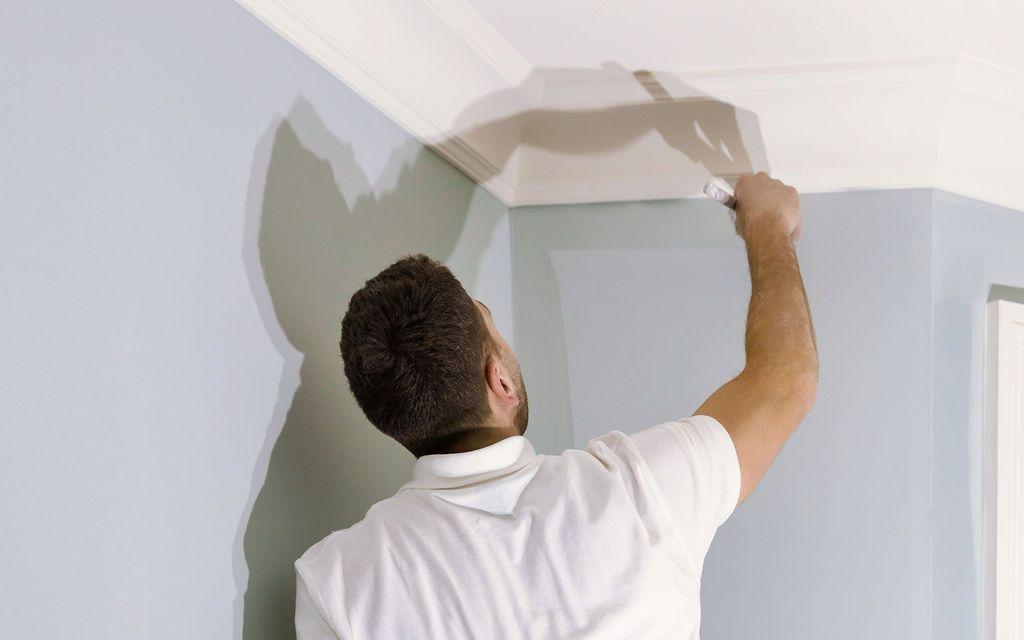
When we brush and roll
A brush and roller give control where spraying would mean masking a whole furnished room, or where the surface is delicate.
Best for
- Furnished, lived-in rooms
- Cutting in and two-colour walls
- Old lime plaster and period features
- Small areas and touch-ups
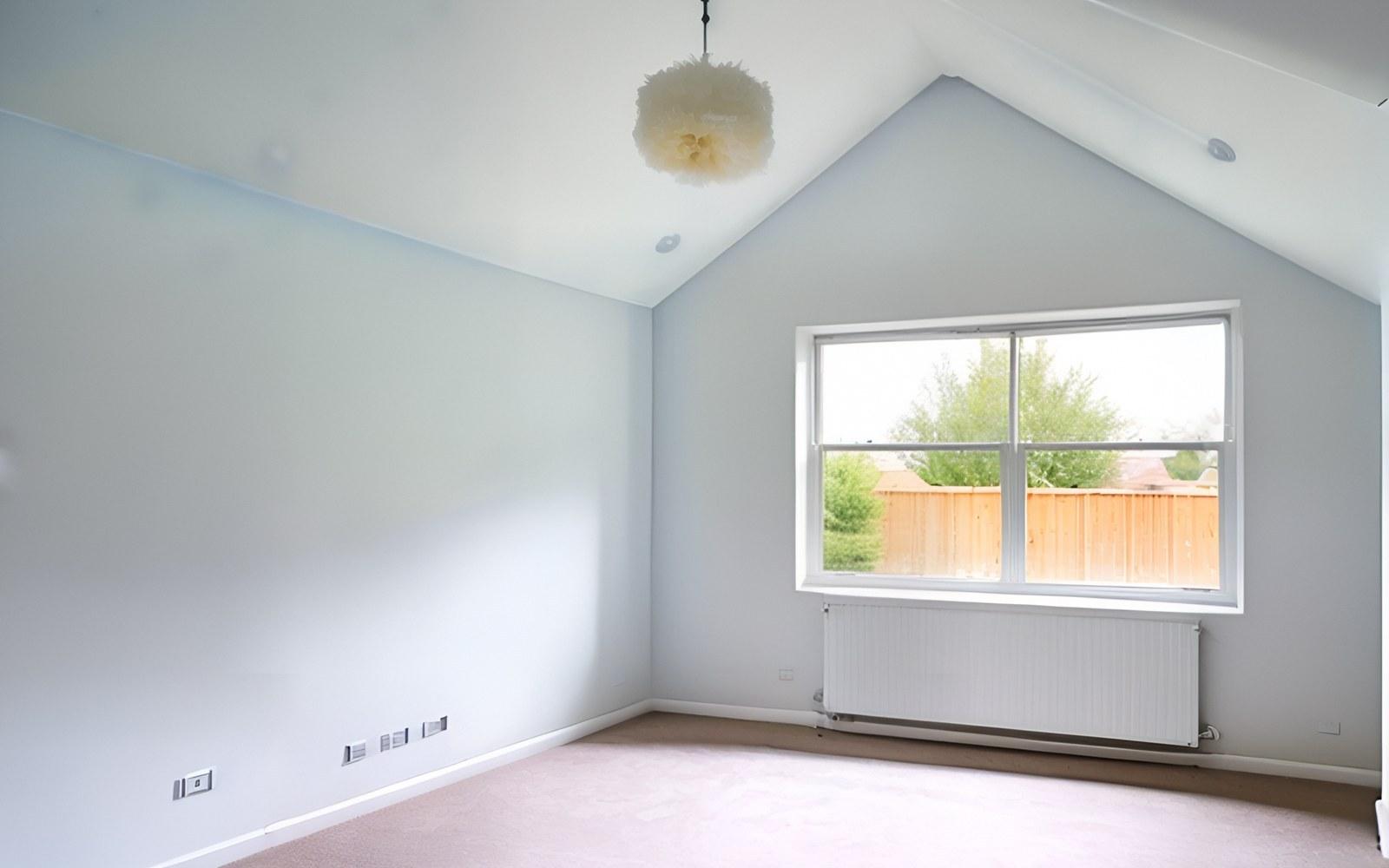
Spray and brush together
Most of our jobs combine the two. We spray the ceilings and walls of a new build, then cut in and finish the woodwork by brush, or back-roll sprayed walls for a soft texture.
How we combine them
- Sprayed ceilings, brushed walls
- Sprayed walls, brush-cut edges
- Sprayed joinery, rolled walls
- Back-rolled spray for texture
Protection and preparation
Masking, ventilation and overspray control
Good spraying is mostly good preparation. Every job follows the same five steps.
Prepare the surfaces
Filling, sanding and priming done first, as for any quality paint job.
Seal and mask
Floors, windows, fittings and neighbouring rooms covered with film and taped at every edge.
Ventilate
Fresh air and extraction set up, with low-odour waterborne paints indoors.
Control overspray
The right tip and pressure for each surface, tested before we start.
Unmask and clean
Masking removed once dry, edges checked and the area left clean.
Project gallery
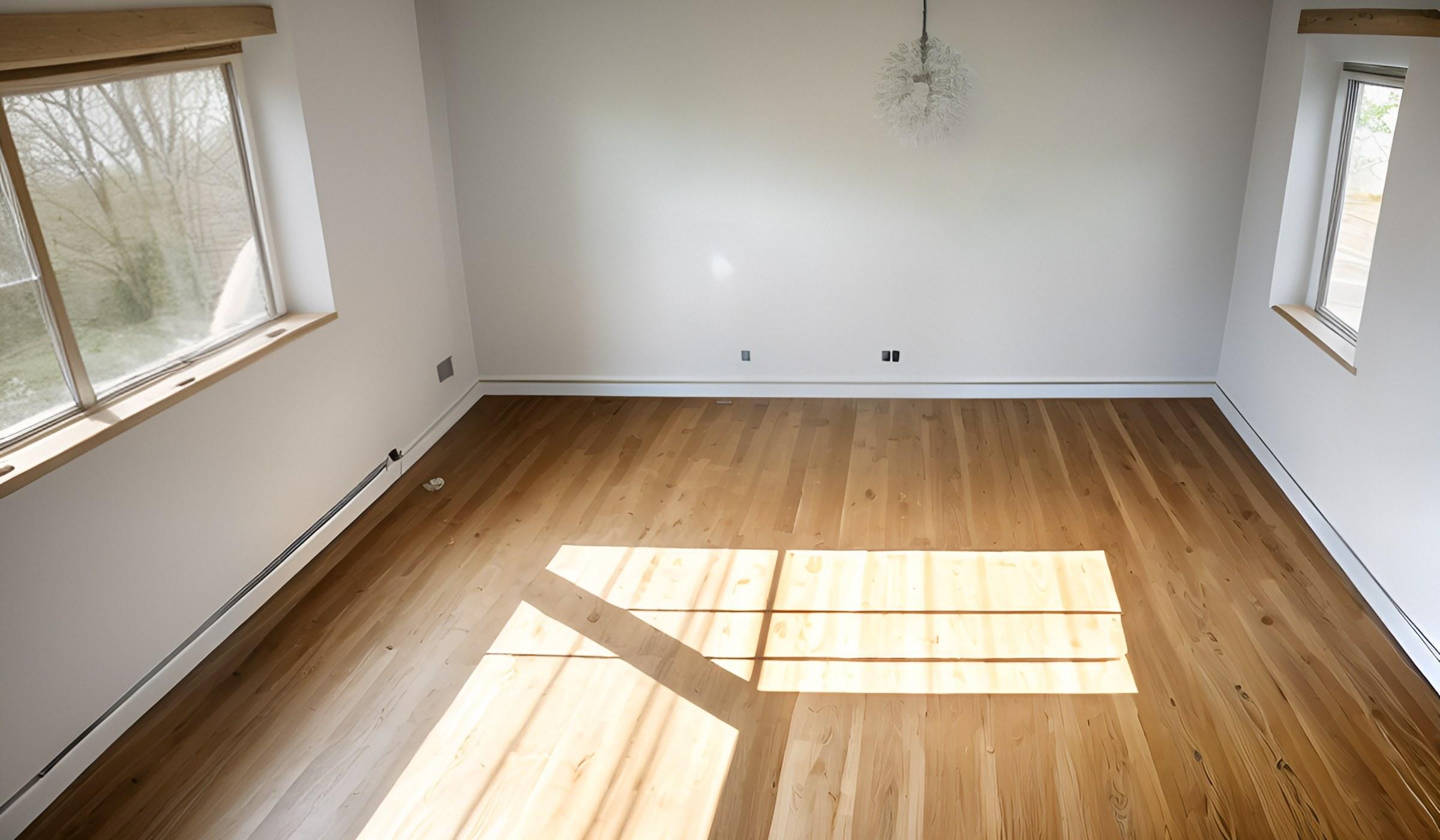
Spray and brushwork at the Richmond new-builds
Two luxury new-build homes in Richmond, where we combined spray and traditional finishes and oiled the oak staircases and handrails by hand. Select a photo to see it larger.
Areas we cover
Spray painting across London and Surrey
FAQ
Spray painting questions
How much does spray painting interior walls cost?
Spraying the walls and ceilings of an empty property usually costs from £5 to £9 per square metre for a mist coat and two finish coats, including masking. Joinery is priced by the item: internal doors from £120 to £180 each (both sides), radiators from £90 to £160 and a staircase with spindles from £650 to £1,400. We give you a fixed, itemised quote after a free visit.
Is spraying quicker than brushing and rolling?
On large, empty areas, yes: airless spraying can coat walls and ceilings several times faster than a roller. Masking takes time, though, so on a single furnished room the overall time is often similar. Spraying saves most time on new builds, open-plan spaces, ceilings and detailed joinery such as spindles and panelled doors.
Is spray painting messy?
Not when it is done properly. We seal off the area, mask every surface that is not being painted, protect floors with taped-down covers and use low-overspray tips and pressures. When we finish, the masking comes off and the room is cleaned, so the rest of the house or building is untouched.
Can you spray rooms that are lived in?
Yes, but for walls and ceilings in furnished rooms we often brush and roll instead, because emptying and masking the room can outweigh the time saved. Joinery such as doors, skirting and radiators is regularly sprayed in lived-in homes, with the room sealed off and doors taken to our workshop where possible.
How long before I can use a sprayed room?
Waterborne paints are touch-dry within an hour or two, and most rooms can be used the same evening once the masking is removed. Sprayed joinery enamels take one to two weeks to reach full hardness, so we ask you to treat doors and handrails gently for the first few days.
What is the difference between airless and HVLP spraying?
Airless spraying pushes paint at high pressure through a fine tip, which suits large areas such as walls, ceilings and cladding. HVLP (high volume, low pressure) gives a finer, more controlled spray with less overspray, which suits doors, furniture and kitchen cabinets. We use whichever is right for each surface.
Free quotes
Get a spray finishing quote
Tell us what needs spraying, the size of the area and when you need it done. We will visit, advise on spray or brush, and send a fixed price.
- 07852 371651
- Monday–Saturday: 07:00–18:00