

Residential · Kitchen spraying
Kitchen spraying in London
Cabinets, islands and kitchen units resprayed in any colour you choose. Your kitchen looks brand new for far less than replacing it, and is back in use within a week.
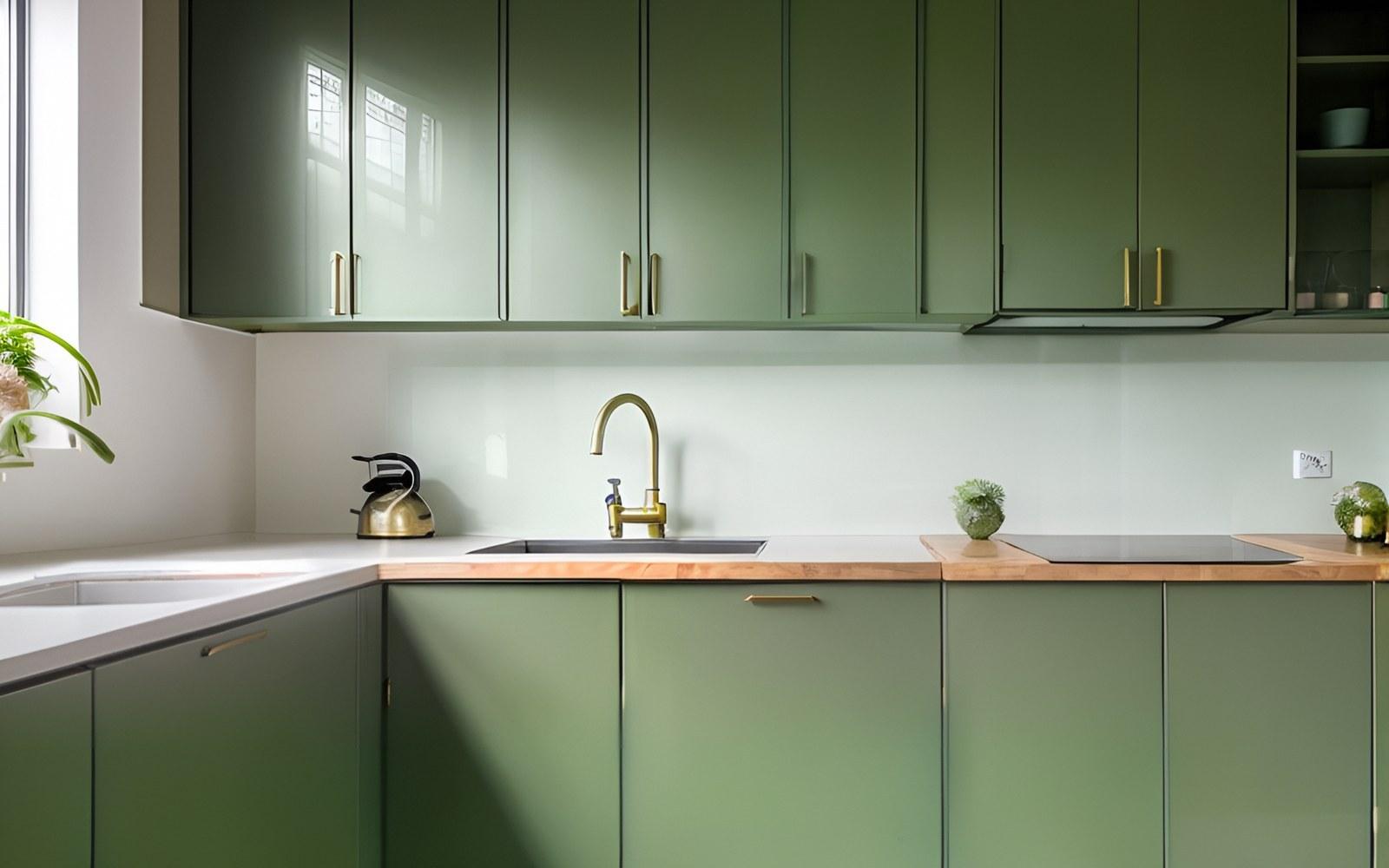
Respray, don’t replace
A new-looking kitchen without the cost of a new kitchen
Most kitchens are replaced because the doors look tired, not because the units have failed. A professional kitchen respray in London costs a fraction of a new fitted kitchen, which can easily run to £15,000 or more once the old one is ripped out, the new one installed and the walls and floor made good. Your worktops, appliances, tiles and plumbing all stay where they are.
It is quicker too. A new kitchen often takes months from design to fitting; kitchen spraying usually takes three to five working days, and no skip, plumber or electrician is needed. Because nothing goes to landfill, it is also the lower-waste choice. Unlike kitchen cabinet painting by brush or roller, a sprayed finish has no brush marks and wears far better, so it looks factory-made rather than painted.
What we spray
Kitchen unit and cupboard spraying, and fitted furniture
Kitchen cupboard spraying is most of what we do, but the same finish works on any fitted furniture in the house.
Cabinet doors and drawer fronts
Shaker, slab, in-frame and glazed doors, sprayed both sides with the edges sealed.
Carcasses, end panels and plinths
Visible cabinet sides, cornices, pelmets and plinths sprayed on site to match the doors.
Kitchen islands
An island sprayed in a contrasting colour, on its own or as part of a full respray.
Dressers, larders and built-ins
Freestanding dressers, larder cupboards, bookcases and media units.
Fitted wardrobes
Bedroom and alcove wardrobes, part of our furniture spraying across London.
Utility and boot rooms
Utility cupboards and boot room benches finished to match the kitchen.
How it works
How we spray a kitchen
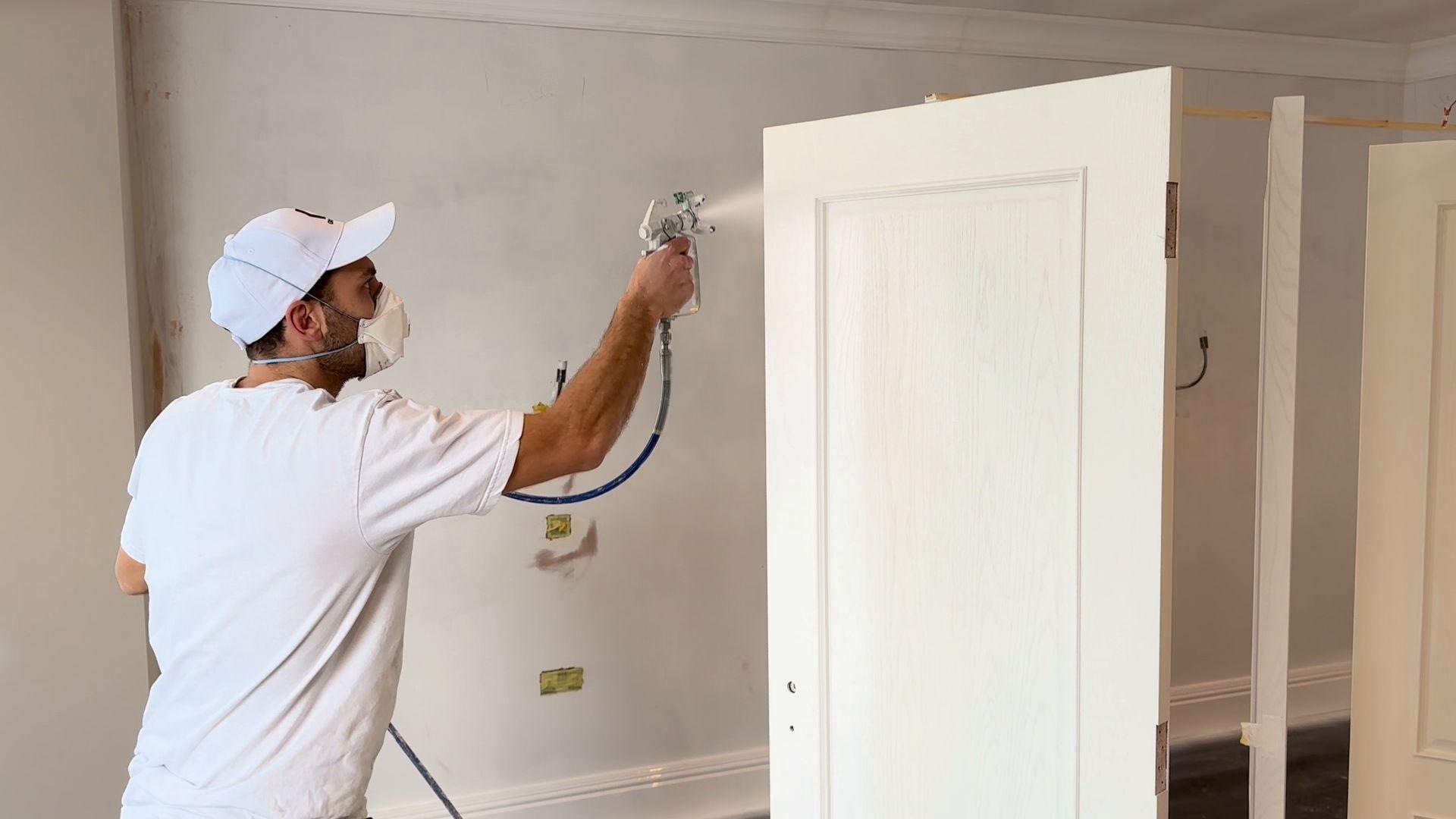
Doors and drawer fronts usually go to our spray workshop, while carcasses and panels are sprayed on site behind full masking. Either way, the steps are the same.
Preparation
Handles and hinges removed and labelled, and doors numbered so every one goes back in its place.
Masking
Worktops, floors, walls and appliances sealed off with film and tape to stop any overspray.
Degreasing and keying
Years of cooking grease cleaned away, then every surface sanded so the primer can grip.
Priming
A bonding primer made for wood, MDF or laminate, filled and sanded smooth once dry.
Spray coats
Two or more coats of hard-wearing lacquer, sprayed in thin, even layers with no brush marks.
Curing and refitting
Doors left to harden, then rehung, adjusted and fitted with your old or new handles.
Colours and finishes
Any colour, matched exactly, in a finish made for kitchens
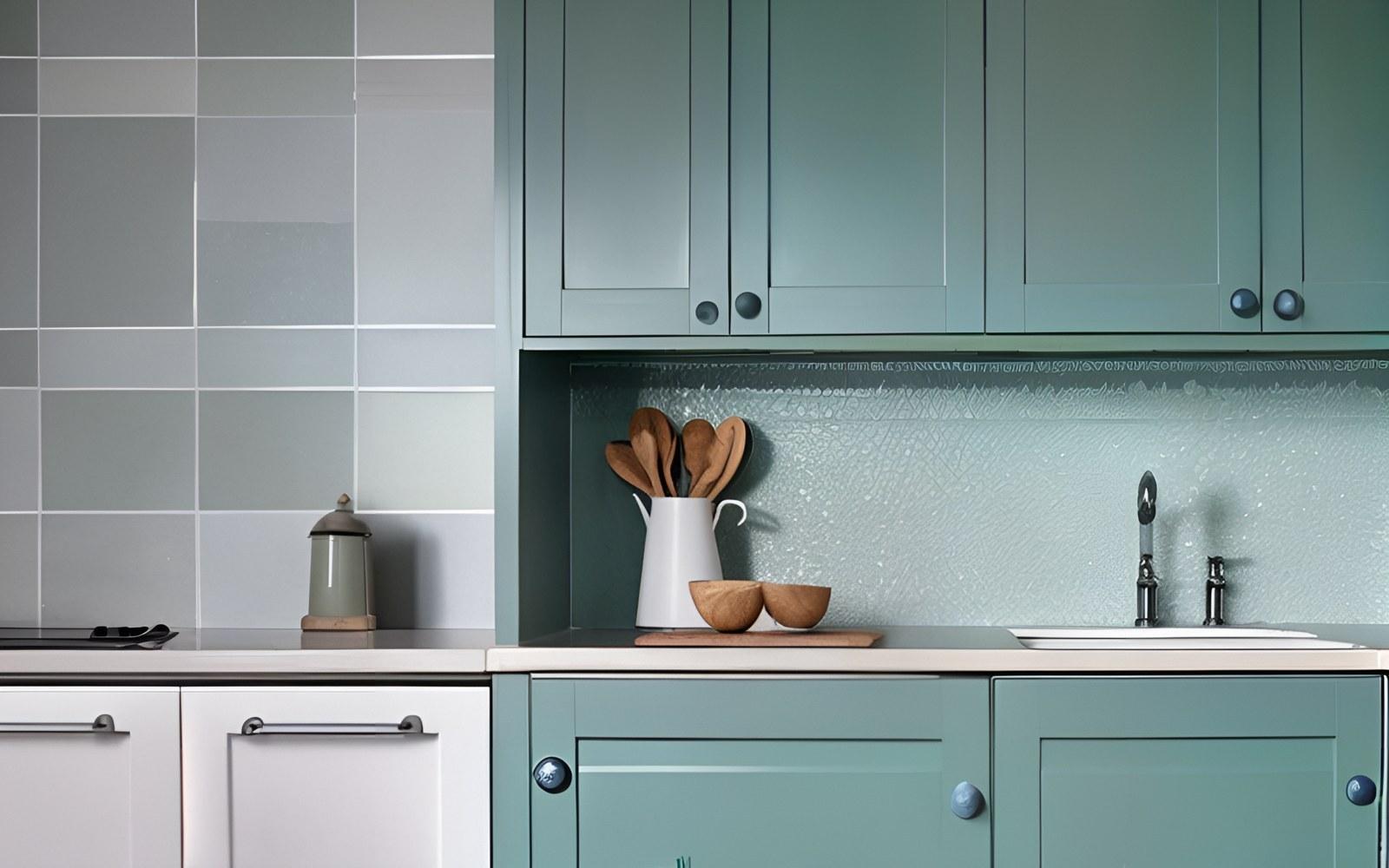
Choose a colour from any paint chart, or bring us a sample, and we will match it. Spraying lets us use tougher lacquers than you can brush on, so the finish copes with steam, grease and daily knocks. Not sure which sheen to choose? Our guide to choosing the right paint finish explains the difference.
- Any colour matched
- Farrow & Ball, Little Greene, RAL or a sample you love, mixed to match.
- Matt to satin
- From a soft, chalky matt to a subtle satin sheen, chosen to suit the room.
- Hard-wearing lacquers
- Waterborne and two-pack coatings that resist steam, grease and cleaning.
- Two-tone kitchens
- Island, wall units or glazed interiors sprayed in a contrasting colour.
Our kitchens
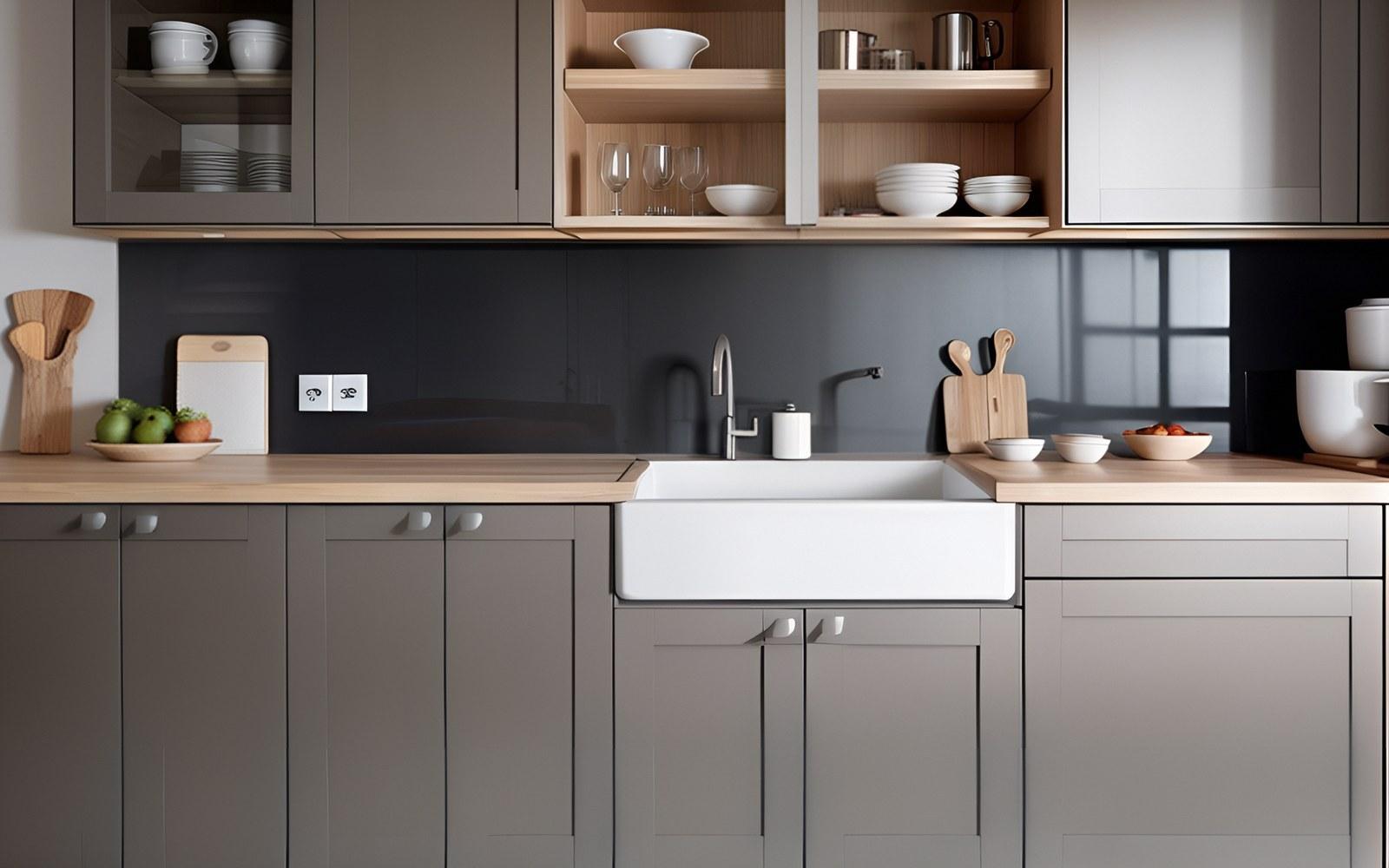
A bespoke-colour kitchen in Barnes
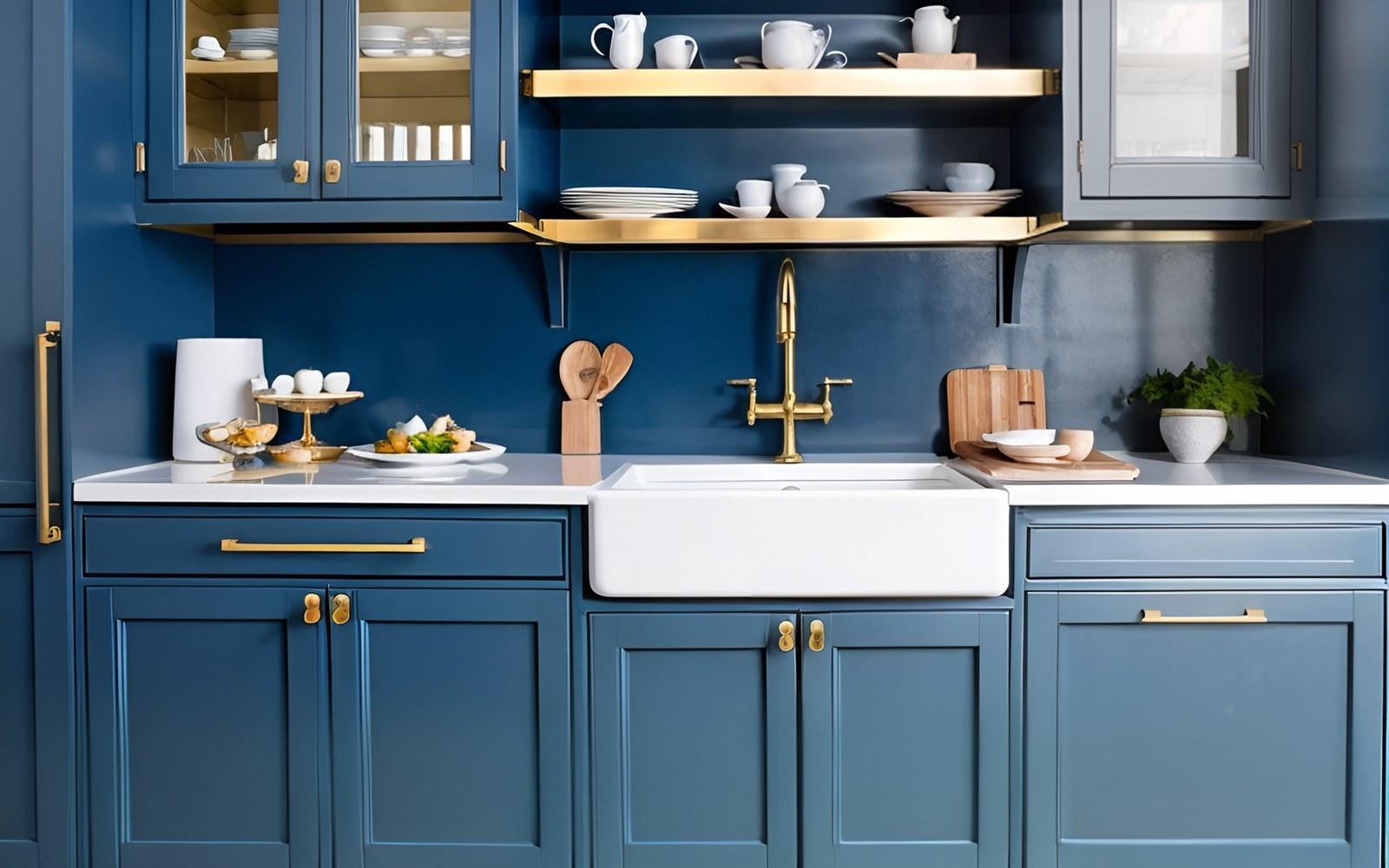
Pale oak-effect units in a Victorian semi, sprayed in a deep blue mixed to match the owners’ fabric sample, as part of a full renovation in Barnes. The doors were sprayed in our workshop while the plastering was finished, so the kitchen was back together in four days.
Before and after
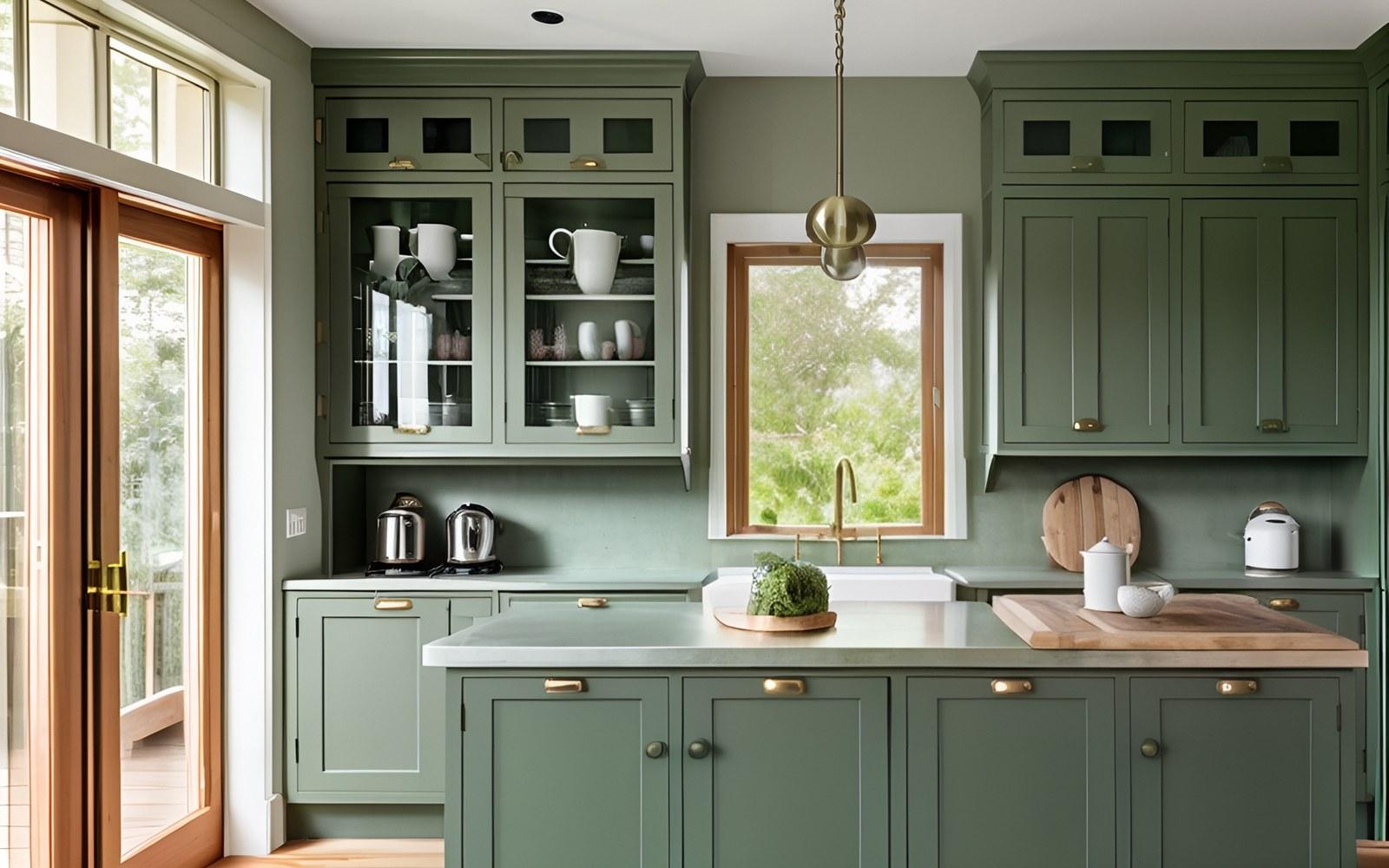
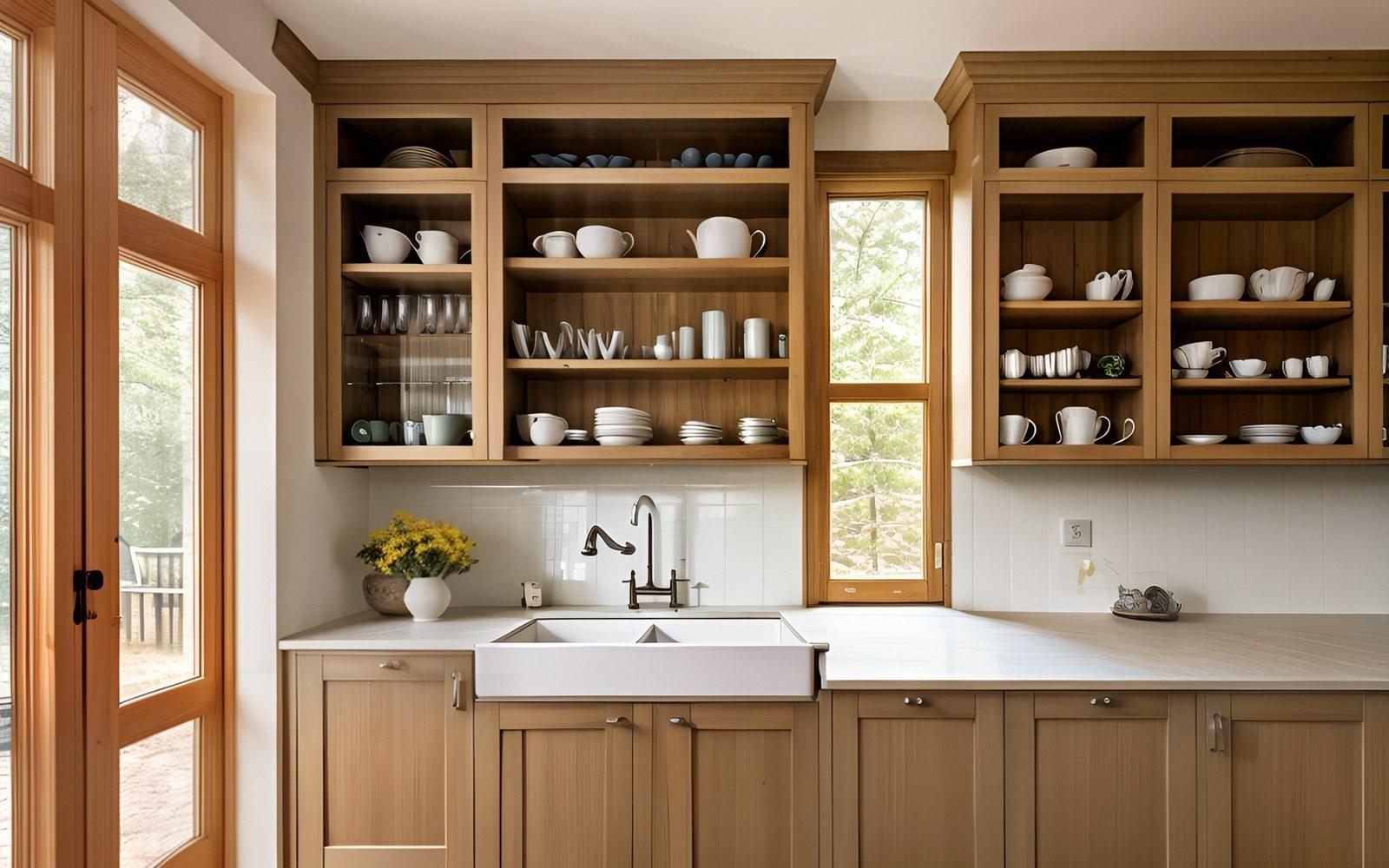
Shaker kitchen respray in Chiswick
Yellowed pine shaker units resprayed in a soft sage green, with the island picked out in a darker shade and new brass cup handles fitted.
Reviews
What our kitchen spraying clients say
“We were about to replace our kitchen. Instead they sprayed the units in a soft green and fitted new handles. It looks like a new kitchen for a fraction of the price.”
Areas we cover
Kitchen spraying across London and Surrey
FAQ
Kitchen spraying questions
How much does kitchen spraying cost in London?
Most kitchens cost between £1,800 and £4,500 to respray, depending on the number of doors, drawers and end panels, and whether the carcasses are sprayed too. An island on its own is usually £650 to £1,200. Send us a few photos and the rough size of your kitchen and we will give you a guide price, then confirm it with a fixed quote. See our guide to kitchen spraying costs.
How long does a sprayed kitchen last?
With the right preparation and a hard-wearing lacquer, a sprayed kitchen should look good for ten years or more. The finish is fully hard after about two weeks, and small chips can be touched in invisibly because we keep a record of the exact colour and sheen.
How long will I be without a kitchen?
Usually three to five working days. When we take the doors and drawer fronts to our workshop, the cabinets stay in place, so you can still reach your cupboards, the sink and most appliances. On days when we spray on site, the room is masked off and we tell you in advance which areas to keep clear.
Does kitchen spraying smell, and is it safe?
We use low-odour waterborne lacquers for work in your home, so the smell is mild and fades within a day or two. The room is ventilated while we spray, extraction fans run where needed, and doors sprayed in our workshop come back fully dry. Pets and children should stay out of the room until we say it is clear.
How do I clean a sprayed kitchen?
Wipe the doors with a soft cloth and warm, soapy water, then dry them. Avoid abrasive pads, bleach and solvent-based cleaners, especially in the first two weeks while the lacquer is still curing. Matt finishes hide fingerprints well but should be wiped rather than scrubbed.
Can laminate, vinyl-wrapped and MDF kitchens be sprayed?
Yes. Solid wood, painted wood, MDF, laminate and most vinyl-wrapped doors can all be resprayed. Laminate is keyed and coated with a specialist bonding primer. Vinyl wrap must be firmly stuck down; if it is lifting at the edges we remove it and prime the MDF underneath. We check every door when we visit and tell you honestly if anything is not worth spraying.
Free quote
Get a kitchen spraying quote
Looking for kitchen spraying near you? We cover London and Surrey, including Richmond, Chiswick, Fulham, Wimbledon and Kensington. Tell us the size of your kitchen and add a few photos, and we can usually give you a guide price without a visit, or call us on 07852 371651.